Marco Island Florida History
Legend says that Ponce de Leon, who discovered Florida in 1513, recorded in his logbook the sighting of "sand hills" which may refer to those at Caxambas on Marco Island. Nevertheless, Caloosa Indians were Marco Island's only inhabitants until the late 19 century.
Marco Island's first permanent settler was William Thomas Collier, who was originally from North Carolina. Collier and his family were sailing around the Florida peninsula in 1871 when they caught sight of Marco and decided to stay.
In 1883, the town of Marco was founded and Collier's son, William D. "Captain Bill" Collier, became the first postmaster. By 1890, men were coming to Marco from far away to fish for the tarpon which were plentiful in these waters. To house these visitors, Captain Bill built the Marco Inn, which is now known as the Marco Hotel and is still in operation today.
In 1896, Captain Bill Collier accidentally discovered evidence of the existence of the prehistoric Caloosa Indians. His find brought archaelologist Frank Hamilton Cushing to Marco, where his expedition would uncover artifacts miraculously preserved in the coastal muck. It was one of the richest archaeological finds in North America.
For more than 40 years, clam harvesting was the leading industry on Marco Island. Two canneries, the E.S. Burnahm Packing Co. and J. Harvey Doxsee Co., canned, steamed, and packaged clams from opposite ends of the island. About 1908, Captain Bill Collier helped the process along by inventing a machine capable of harvesting clams in deep water. By 1947, dwindling harvests from exhausted clam beds caused the last remaining cannery to shut down.
Marco remained almost completely undeveloped until the 1960's, largely because the only way to reach the island was by a narrow, wooden, hand-operated swinging bridge. In the early 1960's, the Deltona Corp. began to develop the island as a planned community. Perhaps the most remarkable thing about the development was that much of the construction was completed before the new bridges were built; construction materials had to be transferred from large trucks to smaller ones to stay within the weight limits for the old wooden swinging bridge.
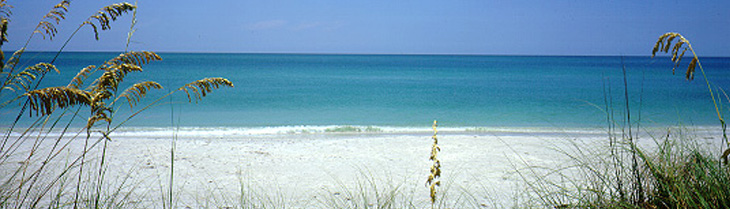
In 1960, the population of Marco Island was about 550; by 1980, it had grown to 4,700 and Marco Island had been transformed from a sleepy fishing village into a plush resort on a crescent-shaped, white sand beach on the Gulf of Mexico.
*Historical information thanks to "Dining and Doing Guide"
Take a look at Marco Island Historical Photos
read about Calusa Indian Artifacts found on Marco Island
|